
In the current environment, no organisation is exempt from experiencing incidents that may compromise its operation: cyberattacks, infrastructure failures, human errors, natural disasters, or interruptions caused by third parties. When these events occur, the difference between halting activity for a few hours, several days, or even weeks largely depends on whether or not there is a well-designed, tested, and maintained disaster recovery plan (DRP).
At SolveIT, we help companies protect their operations through robust and customised recovery strategies, aligned with international standards and the most stringent regulatory requirements.
What is a DRP and why is it essential
A Disaster Recovery Plan (DRP) is a structured set of procedures, technologies, and strategies that enables the recovery of critical systems and the swift resumption of operations following a serious incident.
It's not just about having backups, but about having a planned and tested strategy that ensures:
- That essential information is available when it is needed most.
- That the company can resume operations as soon as possible.
- To reduce the economic, operational, and reputational impact of a crisis.
- That the legal and regulatory requirements regarding security and business continuity are met.
An effective DRP not only mitigates the technical impact of a disaster but also its financial and strategic consequences.
The 3-2-1 rule: the foundation of a solid backup strategy
One of the best practices in any recovery strategy is to apply the 3-2-1 backup rule, a recognised standard in the industry:
- 3. Copies of the data: the original plus at least two backup copies.
- 2. Different storage media: for example, a local server and cloud storage.
- 1. External or off-site backup: to protect against physical disasters or cyberattacks that affect the main infrastructure.
This strategy ensures redundancy, reduces the possibility of total information loss, and allows for quick and reliable operational restoration. If it is also complemented with encryption, file versioning, and regular restoration tests, it becomes an essential pillar of continuity for any business.
Defining clear objectives: RTO and RPO
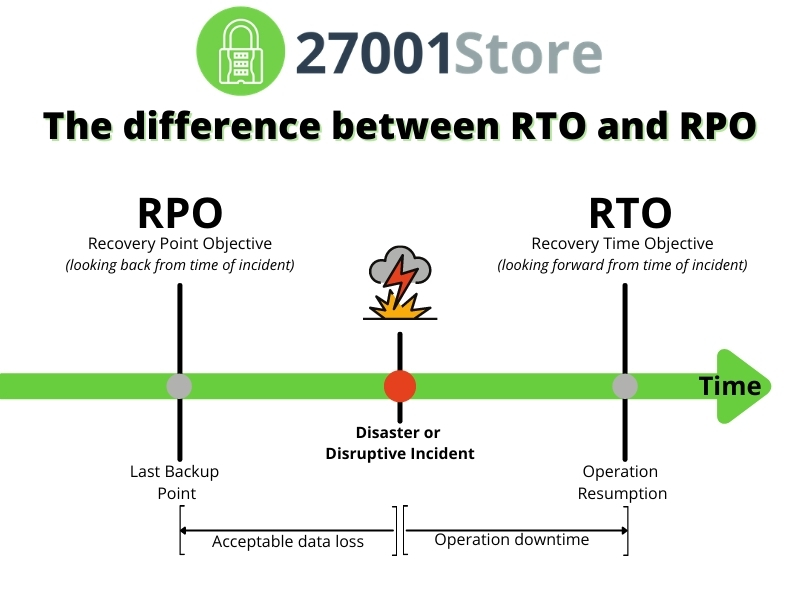
Two key concepts in any DRP are RTO and RPO, which help to set realistic expectations and prioritise resources appropriately:
RTO (Recovery Time Objective): is the maximum time that an organisation can afford to be down after an incident. For example, a company may define its RTO as 4 hours. This means that everything must be up and running again within that timeframe.
RPO (Recovery Point Objective): is the maximum amount of information that can be lost without causing unacceptable damage. For example, if the RPO is 1 hour, it means that backups must be performed with that frequency so that, in the event of an incident, at most one hour of data is lost.
Defining these objectives allows for the alignment of the technical strategy with the actual needs of the business, prioritising critical systems and processes.
A DRP is not just technology, it is strategy
At SolveIT, we do not limit ourselves to installing technical solutions. Our approach is based on designing and implementing a comprehensive plan, tailored to each organisation. This includes:
Identification of critical systems and processes for business continuity.
Definition of realistic RTO and RPO, in line with the impact that an interruption could have.
Selection of secure and efficient backup technologies and platforms.
Automation of encrypted and monitored backups.
Storage in various locations, both local and in the cloud.
Periodic restoration tests to ensure that, when the time comes, the plan really works.
In this way, we transform a basic backup into a real strategy for business protection and resilience.
Regulatory compliance and documentary evidence
Having a documented DRP and a robust backup system is not only advisable from a technical standpoint: it is also a requirement in multiple regulations and security standards. Among them:
ISO/IEC 27001: requires having continuity and disaster recovery plans, as well as secure and verified backups.
NIS2 Directive: establishes obligations to ensure operational resilience and recovery capacity in essential and digital entities.
DORA: sets strict standards for digital continuity in the financial sector, including the availability and restoration of critical data.
With a well-designed recovery plan, organisations can confidently comply with these regulations, provide evidence during audits, and respond effectively to any incidents.

Beyond technology: organisational resilience
A disaster recovery plan is not solely based on technological infrastructure. It also involves people, processes, and decision-making.
That's why, at SolveIT, we work with our clients to:
Define clear responsibilities and roles in the event of an incident.
Establish internal and external communication protocols.
Empower teams to act with speed and coordination.
Carry out simulations and periodic exercises to test the plan.
This comprehensive approach ensures that, in the event of a crisis, the company not only has protected information but also possesses the actual capability to recover without prolonged interruptions.
An investment that ensures continuity and trust
A DRP is not an additional expense, it is a strategic investment that allows:
Reduce operational and financial risks.
Minimise downtime in the event of incidents.
Protect the reputation and trust of customers and partners.
Comply with safety regulations and digital resilience.
Increase responsiveness to critical scenarios.
In a context where incidents are not a remote possibility but a recurring reality, preparation makes the difference between a vulnerable company and a truly resilient one.
Schedule a session with our experts
At SolveIT, we design, implement, and maintain disaster recovery plans tailored to the needs of each organisation.
If your company wants to ensure its operational continuity, protect its critical information, and comply with current regulations, we invite you to schedule a personalised session with our specialists in resilience and business continuity.
Book your session now and discover how we can help you protect your business against any contingency.